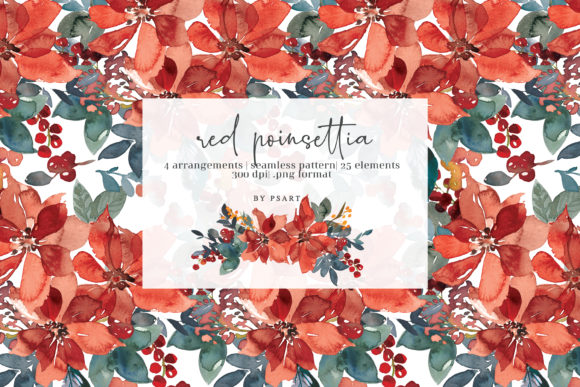
Red Poinsettia Watercolor Clipart: A Designer Review
As a designer who has spent years translating digital files into tangible stitched goods, I approach every new asset with a mix of excitement and skepticism. The holiday season is approaching, and the demand for holiday embroidery is peaking. When I first opened the file for Red Poinsettia Watercolor Clipart, I wasn't just looking at an image; I was visualizing how it would behave under a machine needle. This specific design falls under the category of Illustrations, but its true value lies in how well it translates from a flat screen to a textured fabric surface.
The First Impression: Mood and Visual Weight
The immediate appeal of Red Poinsettia Watercolor Clipart is its softness. Unlike traditional vector art that relies on hard edges and solid blocks of color, this design mimics the bleed and gradient of watercolor paint. For an embroidery project, this presents both an opportunity and a challenge. The mood it creates is nostalgic and elegant, perfect for high-end boutique items rather than rugged workwear. The shape is organic, with petals that seem to dissolve into the background, which suggests that the final finished product will feel delicate and artistic.
However, as a reviewer, my eyes immediately went to the detail level. In a standard machine embroidery design, fine details often get lost if the stitch density isn't managed correctly. The watercolor effect relies on subtle transitions between shades of red and hints of green. If the digitizer hasn't used enough fill stitch variation or if the running stitch count is too low, those beautiful gradients could turn into muddy patches of thread. It is crucial to inspect the file closely before committing to a production run.
A Real-World Test: The Custom Holiday Tote Bag
To truly evaluate this asset, I imagined a specific scenario: creating a limited run of custom canvas tote bags for a local craft fair. These bags are intended as premium holiday gifts, so the presentation needs to be flawless. I pictured the Red Poinsettia Watercolor Clipart centered on a cream-colored canvas bag. The contrast between the deep reds of the poinsettia and the neutral background would likely pop beautifully, making the item stand out on a crowded table.
In this context, the design works exceptionally well because the watercolor style forgives slight imperfections in stitching better than a sharp line-art logo would. If a few threads shift slightly during the wash cycle, the "painterly" look remains intact. However, if I were attempting this on a dark navy sweatshirt, the result might be different. The lighter parts of the watercolor effect might not show up without a significant amount of underlay, which increases the bulk of the custom apparel. For a sweatshirt embroidery project, I would need to ensure the stabilizer is heavy enough to support the weight of the thread without puckering the fabric.
Navigating Fabric and Hoop Challenges
While the aesthetic is lovely, practical application requires caution. There are specific situations where Red Poinsettia Watercolor Clipart should be used carefully. First, consider the hoop size. If the design is large, you cannot simply shrink it down for a small cap or a baby bib. Reducing the scale of a watercolor-style design can cause the delicate gradients to collapse, resulting in a blob of red thread that loses all definition.
Secondly, texture matters. On highly textured fabrics like thick fleece or boucle, the fine details of the petals may get lost in the weave. The thread colors might blend into the fabric rather than standing out. Similarly, on stretchy fabrics like jersey knit, the tension required to hold the design flat can distort the organic shapes of the flowers. I always advise testing the design on scrap fabric first. Stitch it out on the exact material you plan to use, then wash and dry it. Does the stitch density hold up? Do the colors remain vibrant?
Another critical area is curved surfaces, such as caps. The rigid nature of embroidery hoops makes it difficult to achieve a smooth curve on a rounded brim. The watercolor flow of the poinsettia might look distorted if forced onto a tight curve. For these applications, a flatter, more geometric version of the flower might be safer. Additionally, avoid using this design for tiny lettering or dense decorative accents where the intricate details might become unreadable.
Impact on Brand and Customer Perception
For an Etsy seller or a small shop product owner, the choice of design assets directly impacts customer trust and perceived value. Using Red Poinsettia Watercolor Clipart signals a certain level of sophistication. It moves the brand away from generic, clip-art-heavy holiday goods and toward a curated, handmade aesthetic. Customers looking for a personalized gift often seek items that feel unique and thoughtful. This design helps achieve that "boutique" look.
When you present a printable mockup or a photo of the finished product, the soft edges of the watercolor style photograph very well. It adds depth to the image, making the handmade product appear more professional. This visual appeal can drive buyer engagement and justify a higher price point. However, consistency is key. If your brand usually features bold, graphic designs, introducing a soft watercolor piece might confuse your audience unless it fits within a cohesive collection.
Practical Notes for the Professional Maker
Before you integrate Red Poinsettia Watercolor Clipart into your workflow, keep these practical notes in mind. Always check the licensing terms. Are you allowed to sell the physical items created with this digital embroidery file? Can you use it for commercial embroidery projects? Understanding the license is non-negotiable for any craft business.
Next, review the embroidery file specifications. Does it include separate layers for different colors? This allows you to adjust thread colors to match your specific inventory. If the file is locked, you lose flexibility. Also, test the design in black and white mockups to see if the contrast holds up without color bias. Compare how it looks on light versus dark fabric backgrounds to determine if you need to add a backing layer.
Finally, invest in the right stabilizer. For a design with this much fill and potential density, a cut-away stabilizer might be necessary to prevent shifting over time, especially on items that will undergo frequent washing. Whether you are making an embroidered patch, a kitchen towel, or a baby embroidery set, the foundation of your work determines its longevity.
In conclusion, Red Poinsettia Watercolor Clipart is a versatile asset for designers willing to put in the extra effort to optimize it for stitching. It offers a distinct, elegant look that elevates holiday merchandise, provided you respect the limitations of the medium and test thoroughly. With careful planning, it can become a standout piece in your seasonal collection.